Best Phonics Classes for Kids: A Parent’s Guide
Are you looking for the best phonics classes for kids to help your child learn to read confidently? Developing early reading skills is an important part of a child’s learning journey. Phonics helps children understand how letters and sounds work together, making it easier to read words and develop spelling skills.
For parents of young learners, choosing the right phonics program means looking beyond attractive advertisements. A good program should provide structured learning, age-appropriate activities, regular practice and opportunities for children to apply what they learn.
At SkillUp Juniors, our learning offerings include phonics for young learners in Classes 1 and 2. This guide explains what phonics is, why it matters and what parents should consider before enrolling their children.
What Are Phonics Classes?
Phonics classes teach children the relationship between written letters and the sounds they represent.
For example, a child learns that the letter s represents the /s/ sound. Children then practise combining sounds to read simple words such as sat, sun and sit.
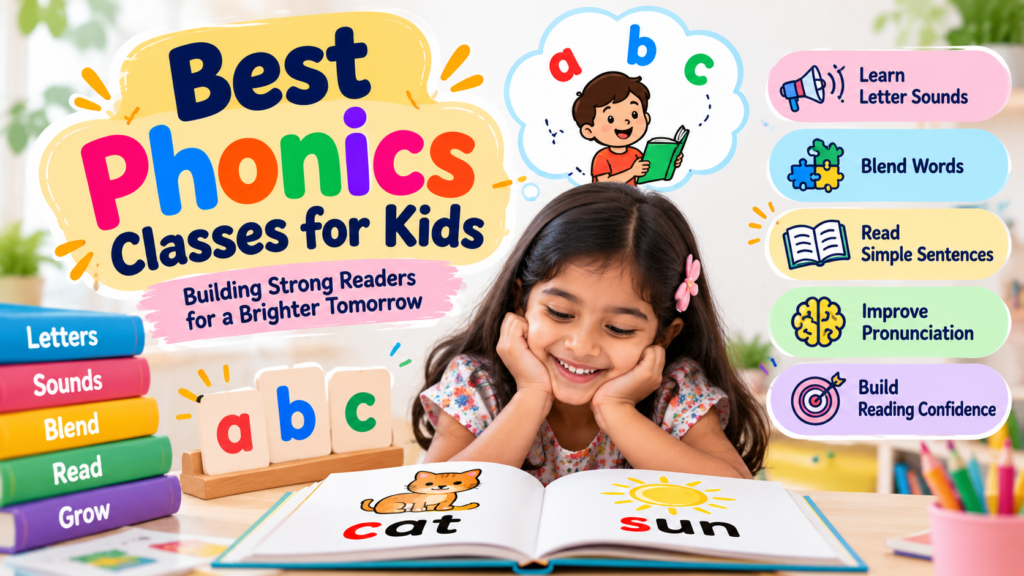
Through guided activities, children can learn to:
- Recognise letters and their sounds.
- Blend individual sounds to read words.
- Break words into separate sounds.
- Read simple words and sentences.
- Improve spelling through sound awareness.
- Develop confidence in early reading.
Phonics is one important part of learning to read. Children also benefit from listening, vocabulary development, understanding stories and reading regularly.
| Letter sounds | Blending word |
|---|---|
| c – a – t | cat |
| b – a – t | bat |
| m – a – p | map |
| s – u – n | sun |
| p – e – n | pen |
| h – e – n | hen |
| d – o – g | dog |
| p – i – g | pig |
| c – u – p | cup |
| f – i – t | fit |
| r – u – n | run |
| b – u – s | bus |
| s – i – t | sit |
| h – o – t | hot |
| l – e – g | leg |
| f – i – sh | fish |
| sh – i – p | ship |
| ch – i – p | chip |
| f – l – a – g | flag |
| s – t – o – p | stop |
Why Are Early Reading Skills Important?
1. They Build Letter-Sound Awareness
Children learn to connect the letters they see with the sounds they hear. This understanding helps them begin decoding written words rather than relying only on memorisation.
2. They Support Early Reading
When children understand blending, they can combine individual sounds to read simple words. For example, /c/, /a/ and /t/ can be blended to read cat.
3. They Develop Spelling Skills
Recognising the sounds within a word can help children practise spelling by identifying the sounds they need to represent with letters.
4. They Encourage Independent Learning
As children practise reading unfamiliar words, they can gradually learn strategies for working through words themselves.
5. They Create Opportunities for Reading Practice
Age-appropriate phonics activities provide opportunities to repeat sounds, read words and apply new skills. Regular practice helps children strengthen what they learn.
Every child progresses differently, so encouragement and appropriate guidance are important throughout the learning process.
How to Choose the Right Phonics Program
Before enrolling your child, consider these six factors.
1. A Structured Curriculum
Look for a program that introduces foundational sounds and reading skills in a logical sequence. Lessons should build on previously learned concepts rather than introducing too many new ideas at once.
2. Age-Appropriate Activities
Children beginning to recognise letters need different activities from children who can already read simple words. Choose a program that considers your child’s age and current reading ability.
3. Interactive Teaching Methods
Young learners often benefit from picture cards, sound games, word-building activities, reading exercises and opportunities to answer questions.
4. Regular Practice
Children need repeated opportunities to recognise sounds, blend words and read. Ask how the program encourages practice during and between sessions.
5. Teacher or Mentor Guidance
Guided instruction can help children identify mistakes, practise difficult sounds and receive feedback. Parents should understand how learning progress is reviewed.
6. A Convenient Learning Format
Online classes can allow children to learn from home. Check the class schedule, teaching format, device requirements and opportunities for your child to participate.
The best choice is the program that matches your child’s needs and provides a supportive learning experience.
What Will Children Learn in Phonics Classes?
A beginner phonics program may include the following skills.
Letter recognition: Identifying letters and understanding their sounds.
Sound blending: Combining sounds to read words such as map, sun and pen.
Sound segmentation: Identifying the individual sounds within a word.
Word reading: Practising simple words and recognising familiar spelling patterns.
Early sentence reading: Applying phonics knowledge to read suitable words and sentences.
Listening and pronunciation: Paying attention to sounds and practising how words are spoken.
The order and pace of instruction should be adapted to the child’s current abilities and progress.
Are Online Phonics Classes Effective?
Online phonics classes can provide structured instruction and guided practice without requiring families to travel to a physical classroom.
They may be particularly convenient for parents who want to include reading practice in their child’s weekly routine.
When comparing online programs, check whether children have opportunities to respond, practise sounds aloud, participate in activities and receive guidance.
Parents can also support learning at home through shared reading, alphabet games and short daily practice sessions.
Online learning is not automatically better than offline learning. The teaching approach, quality of interaction and suitability for the child are important considerations.
Why Consider SkillUp Juniors for Phonics Learning?
SkillUp Juniors offers learning programs for children, including phonics for young learners in Classes 1 and 2.
When exploring our phonics offering, parents can enquire about the curriculum, class schedule, teaching approach and current enrollment options to determine whether the program suits their child’s learning needs.
Before enrolling, consider discussing your child’s current reading level and the specific skills you would like them to develop.
Our aim is to encourage children to build foundational skills through age-appropriate learning opportunities.
Simple Phonics Activities Parents Can Try at Home
You can support your child’s learning with simple activities that take only a few minutes.
Sound Hunt
Choose a sound, such as /b/, and ask your child to find objects beginning with that sound, such as a ball or a book.
Build a Word
Use letter cards to form simple words such as cat, map and sun. Ask your child to say each sound and blend them together.
Read Together
Read an age-appropriate story with your child. Point out familiar letters and sounds when appropriate, and talk about what happens in the story.
Guess the Sound
Say a simple word and ask your child to identify its first sound. You can gradually introduce final sounds and individual sounds within words.
Celebrate Small Achievements
Appreciate your child’s effort when they recognise a new sound or attempt an unfamiliar word. Avoid comparing their progress with that of other children.
Keep the activities enjoyable and adjust their difficulty to suit your child’s current level.
Frequently Asked Questions About Early Reading
1. What are the phonics classes for kids?
The best phonics classes offer a structured curriculum, age-appropriate teaching, interactive activities, regular practice and suitable guidance. Parents should compare programs based on their child’s learning needs rather than choosing by advertising claims alone.
2. At what age can children start phonics classes?
Children can begin developing sound awareness and letter-sound knowledge in early childhood. Formal phonics instruction should match their developmental stage and existing skills. SkillUp Juniors offers phonics learning for children in Classes 1 and 2.
3. Can children learn phonics online?
Yes. Online classes can teach letter sounds, blending, word reading and early spelling through guided lessons and interactive activities. Children also benefit from regular practice at home.
4. How long does it take for a child to learn phonics?
There is no fixed timeline. Progress depends on the child’s starting point, learning needs, practice routine and the pace of instruction.
5. Does phonics improve English fluency?
Phonics supports word reading and sound recognition. However, broader English language development also involves vocabulary, grammar, listening, speaking and understanding what is read.
6. How can I enrol my child in SkillUp Juniors phonics classes?
Contact SkillUp Juniors to enquire about the current phonics program, available batches, schedule and fees.
Help Your Child Begin Their Reading Journey
Learning to read is a gradual process. With appropriate instruction, regular practice and encouragement, children can develop a stronger understanding of letters, sounds and words.
If you are searching for the best phonics classes for kids, explore the phonics learning opportunities available through SkillUp Juniors.
Contact SkillUp Juniors: 9353387479
Get in touch to learn more about our phonics program for young learners in Classes 1 and 2.