
Best Online Maths Classes for Kids: A Parent’s Guide
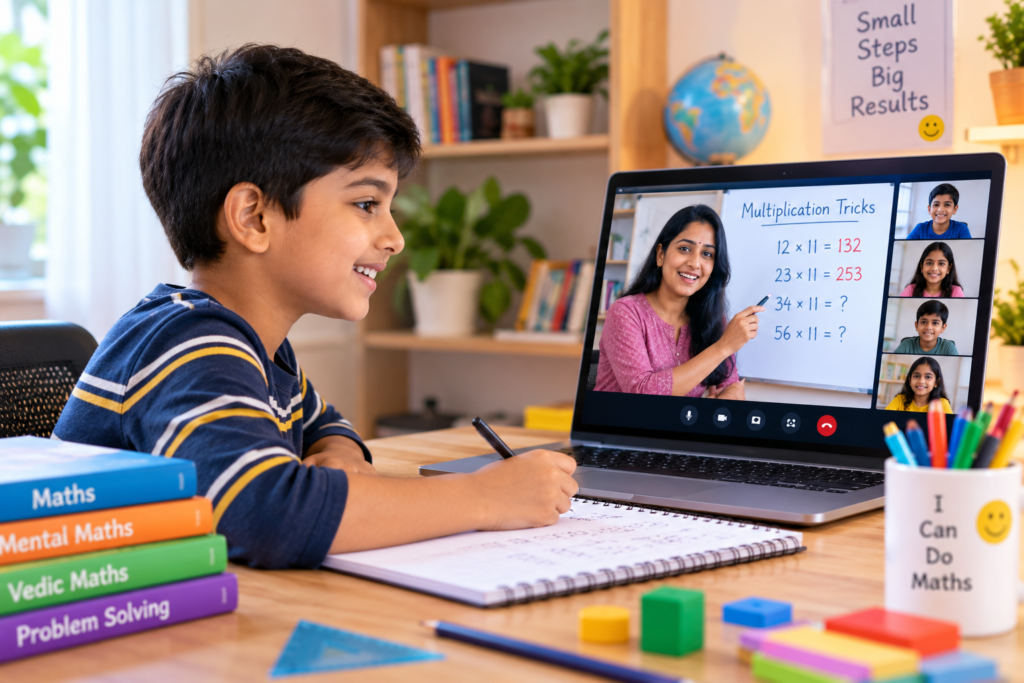
Mathematics is an important part of a child’s education, but some children need additional practice to feel comfortable with numbers, calculations and problem-solving. With interactive lessons and regular guidance, children can explore mathematical concepts at their own pace.
Choosing the best online maths classes for kids involves more than finding a programme that teaches calculations. Parents should look for classes that explain concepts clearly, encourage active participation and help children apply mathematical thinking in everyday situations.
In this guide, we explore the benefits of online maths learning, what to look for in a programme and how parents can support their children’s mathematical development at home.
Why Are Online Maths Classes Important for Kids?
Children learn mathematics in different ways. Some understand concepts quickly, while others benefit from additional explanations, visual examples and repeated practice.
The best online maths classes for kids can provide structured opportunities to practise mathematical concepts beyond regular schoolwork. Depending on the programme, children may work on number recognition, arithmetic, mental calculations, multiplication, logical reasoning and problem-solving.
Here are some potential benefits of online maths learning.
1. Builds Strong Number Skills
A good maths programme helps children understand numbers and the relationships between them. Activities involving counting, place value, addition, subtraction, multiplication and division can strengthen foundational knowledge.
Children who understand these concepts have a better foundation for learning more advanced mathematical topics as they progress through school.
2. Encourages Mental Maths
Mental maths involves solving calculations without relying entirely on written methods or a calculator. It encourages children to recognise number patterns, break calculations into smaller steps and select suitable strategies.
The best online maths classes for kids may include timed challenges, number games and mental calculation exercises. These activities can make practice engaging while helping children become more familiar with different calculation methods.
Accuracy and understanding should come before speed. Children need time to understand why a method works rather than memorising shortcuts alone.
3. Develops Logical Thinking
Mathematics encourages children to identify patterns, compare information and follow a sequence of steps to solve problems.
Puzzles, number sequences, mathematical riddles and real-life word problems can help children practise these skills. Regular exposure to different problem types also encourages children to explain how they arrived at an answer.
4. Supports Confidence Through Practice
Some children hesitate to attempt maths questions because they are worried about making mistakes. A supportive learning environment can help them see mistakes as opportunities to understand a concept better.
Interactive online classes can give children opportunities to ask questions, try different approaches and receive feedback. Consistent practice can help them become more comfortable with mathematical tasks over time.
5. Makes Learning More Interactive
Online learning can incorporate visual explanations, quizzes, interactive worksheets and live discussions. These methods can make abstract concepts easier to explore.
When comparing the best online maths classes for kids, parents should check whether children actively solve questions and interact with their mentor instead of simply watching demonstrations.
What Should You Look for in the Best Online Maths Classes for Kids?
Every child has different learning needs. Before enrolling, consider the following factors.
1. Age-Appropriate Curriculum
The content should match the child’s age, class level and existing understanding.
For younger children, suitable topics may include number recognition, counting, patterns and basic arithmetic. Older children may benefit from multiplication strategies, fractions, mental maths, advanced calculations and more complex problem-solving activities.
A structured programme should build skills progressively rather than introduce difficult concepts before the child is ready.
2. Live Interaction With Mentors
Live classes can allow children to ask questions, explain their thinking and receive guidance when they encounter difficulties.
When evaluating the best online maths classes for kids, ask how much time each child gets to participate. Smaller groups may offer more opportunities for individual attention, although the quality of teaching and class structure also matter.
3. Concept-Based Teaching
Children should understand mathematical concepts instead of relying only on memorised procedures.
For example, when learning multiplication, children can explore repeated addition, equal groups and number patterns before practising calculation techniques.
Concept-based teaching helps children understand when and why a method can be used.
4. Regular Practice and Feedback
Mathematics requires practice. Look for a programme that provides suitable exercises, reviews previous concepts and helps children understand their mistakes.
Feedback should explain the steps needed to solve a problem correctly, rather than simply marking an answer wrong.
5. Progress Monitoring
Parents should be able to understand which concepts their child has learned and which areas need additional practice.
Short assessments, practice tasks and mentor feedback can help identify learning gaps and guide the next steps.
6. A Child-Friendly Learning Environment
Children are more likely to participate when they feel comfortable asking questions and trying unfamiliar problems.
Choose online maths classes that encourage curiosity, patience and effort. Avoid programmes that rely entirely on competition or speed, particularly when a child is still developing foundational skills.
Different Types of Online Maths Classes for Kids
Online maths programmes may use different teaching methods. Understanding these approaches can help parents choose a suitable option.
Regular School Maths Support
These classes focus on concepts related to the child’s school curriculum. They may help children review classroom topics, practise exercises and strengthen areas where they need additional support.
This option may be appropriate when a child needs help understanding school mathematics.
Mental Maths Classes
Mental maths classes focus on calculation strategies, number relationships and solving selected calculations mentally.
Children may practise number combinations, arithmetic strategies and techniques for checking answers. The goal should be to develop flexible thinking and accuracy, not just faster responses.
Vedic Maths Classes
Vedic Maths programmes introduce calculation techniques and patterns that can provide alternative ways to approach certain mathematical problems.
Children should first develop a sound understanding of basic arithmetic. Parents should check whether a Vedic Maths course explains the techniques clearly and gives children enough practice to apply them correctly.
You can explore Vedic Maths learning at SkillUp Juniors.
Maths Games and Problem-Solving Classes
Some programmes use puzzles, quizzes, number games and real-life challenges to encourage mathematical reasoning.
These activities can help children practise identifying patterns, interpreting information and selecting strategies to solve problems.
How to Choose Maths Classes Based on Your Child’s Age
The right learning approach depends on the child’s current abilities, not only their age.
Classes 1 and 2: Build the Foundations
Children at this stage can benefit from activities involving counting, number recognition, basic addition and subtraction, shapes and simple patterns.
Use objects, drawings and everyday examples to make numbers easier to understand.
Classes 3 and 4: Strengthen Calculation Skills
Children can practise multiplication tables, division, mental calculations, place value and simple word problems.
Interactive quizzes and regular revision can help them become more familiar with mathematical concepts.
Classes 5 and 6: Develop Flexible Strategies
At this stage, children can explore larger calculations, fractions, decimals, factors, multiples and more challenging word problems.
Mental maths and selected Vedic Maths techniques may provide additional strategies for approaching suitable calculations.
Classes 7 and 8: Improve Reasoning and Accuracy
Children can practise more complex arithmetic, percentages, ratios, algebraic thinking and multi-step problems.
The focus should be on understanding concepts, choosing appropriate methods and explaining the reasoning behind an answer.
Classes 9 and 10: Apply Concepts Independently
Older students may need curriculum-focused revision, practice with more advanced topics and opportunities to solve examination-style questions.
Parents should select classes that align with the student’s syllabus and individual learning needs.
How SkillUp Juniors Approaches Maths Skill Development
SkillUp Juniors offers learning programmes designed to help children practise useful academic and life skills. Its maths-related learning options include Vedic Maths and mental maths activities.
When considering SkillUp Juniors or another provider, parents should check the available programme, age eligibility, session schedule, curriculum, practice materials and fees before enrolling.
The aim of a maths learning programme should be to help children understand number concepts, practise suitable strategies and develop a positive approach to solving mathematical problems.
To learn more about the organisation, visit the SkillUp Juniors website.
Simple Ways Parents Can Improve Maths Practice at Home
Online classes can be supported with short, practical activities at home. Children do not always need additional worksheets to practise mathematics.
Practise Maths During Everyday Activities
Ask your child to count items while organising groceries, compare prices while shopping or calculate the total cost of a few items.
These activities show how mathematical skills are used in everyday situations.
Play Number Games
Use number puzzles, multiplication challenges, card games or simple arithmetic quizzes. Choose activities that match your child’s current level.
Keep the experience enjoyable rather than turning every activity into a test.
Encourage Children to Explain Their Answers
When your child solves a problem, ask, “How did you get that answer?”
Explaining the steps helps children organise their thoughts and can reveal whether they understand the concept or are relying on guesswork.
Practise for Short Periods Regularly
A short, consistent practice session can be more manageable than a long session that leaves a child tired.
Review earlier topics periodically and introduce new concepts when the child is ready.
Celebrate Effort and Improvement
Recognise when your child checks an answer carefully, tries a new strategy or continues working on a difficult question.
Encouragement can help children develop persistence and a more positive attitude towards learning mathematics.
Common Mistakes to Avoid When Choosing Online Maths Classes
Parents can make a more informed decision by avoiding these common mistakes.
- Choosing only by price: Compare teaching quality, curriculum, practice opportunities and support alongside fees.
- Focusing only on speed: Fast calculations are useful in some contexts, but conceptual understanding and accuracy are essential.
- Ignoring the child’s current level: A programme that is too easy or too difficult may not meet the child’s needs.
- Expecting immediate results: Mathematical learning takes practice, revision and time.
- Overloading the schedule: Leave enough time for schoolwork, rest, play and independent practice.
- Not checking class interaction: Make sure the programme gives children opportunities to solve problems and ask questions.
The best online maths classes for kids should fit the child’s learning goals and encourage steady progress without unnecessary pressure.
10 Easy Mental Maths Tricks for Kids
| Calculation Tip | Example | Description |
|---|---|---|
| Multiplication by 11 | 23 × 11 = 253 | Add the digits (2 + 3 = 5) and place 5 between 2 and 3. This works when the digit sum is less than 10. |
| Multiplication by 5 | 48 × 5 = 240 | Multiply by 10 and divide by 2. A useful mental maths trick for kids. |
| Multiplication by 9 | 7 × 9 = 63 | Multiply by 10 and subtract the original number: 70 − 7 = 63. |
| Squaring numbers ending in 5 | 35 × 35 = 1225 | Multiply 3 by the next number (4) to get 12, then append 25. |
| Adding 99 | 246 + 99 = 345 | Add 100 and subtract 1. This makes mental addition easier. |
| Subtracting 99 | 500 − 99 = 401 | Subtract 100 and add 1 back. |
| Multiplication by 25 | 36 × 25 = 900 | Multiply by 100 and divide by 4: 3600 ÷ 4 = 900. |
| Multiplication by 101 | 42 × 101 = 4242 | Multiply by 100 and add the original number: 4200 + 42 = 4242. |
| Adding numbers mentally | 38 + 27 = 65 | Add tens and ones separately: 30 + 20 = 50, and 8 + 7 = 15. Total = 65. |
| Checking subtraction | 82 − 37 = 45 | Add the answer to the number subtracted: 45 + 37 = 82. This verifies the result. |
Frequently Asked Questions
Which are the best online maths classes for kids?
The best choice depends on the child’s age, learning needs and goals. Compare the curriculum, teaching methods, mentor interaction, practice materials, feedback and fees before choosing a programme.
Are online maths classes suitable for primary school children?
They can be suitable when lessons are interactive, age-appropriate and broken into manageable activities. Parents should also consider their child’s comfort with online learning and screen time.
What is the difference between mental maths and Vedic Maths?
Mental maths is a broad term for calculating mentally using number relationships and different strategies. Vedic Maths courses teach particular calculation techniques associated with the Vedic Maths tradition. Some techniques may overlap with broader mental maths practice.
How many days a week should children practise maths?
The right schedule depends on the child’s age, current skills and workload. Regular, manageable practice with time for revision is generally more sustainable than occasional long sessions.
Can online maths classes help children who struggle with calculations?
Well-structured classes may help by revisiting foundational concepts, offering guided practice and providing feedback. If a child continues to experience significant difficulty, parents can discuss their concerns with the child’s school teacher and consider additional educational support.
Should parents choose maths tuition or mental maths classes?
It depends on the child’s needs. Maths tuition may be more appropriate for school syllabus support, while mental maths classes focus on calculation strategies and number fluency. Some children may benefit from both, provided the workload remains manageable.
Conclusion
Finding the best online maths classes for kids starts with understanding what your child needs to learn. Look for clear explanations, interactive teaching, regular practice and supportive feedback.
Whether you choose school maths support, mental maths or Vedic Maths, focus on building understanding before speed. With suitable guidance and consistent practice, children can strengthen their mathematical foundations and become more confident in approaching new problems.
Explore the available learning options at SkillUp Juniors to see which programme may suit your child’s needs.