
Personality Development Online Classes for Kids: A Parent’s Guide
Every parent wants their child to grow into a confident, thoughtful and independent individual. Academic learning is important, but children also need opportunities to express their ideas, communicate with others, manage emotions and handle everyday challenges.
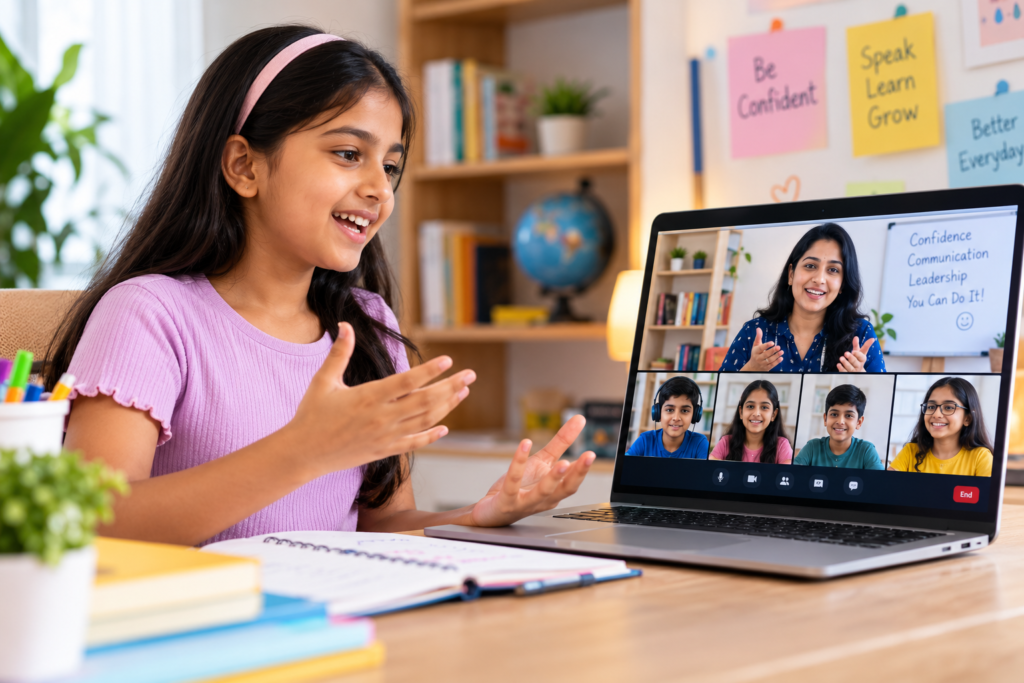
This is where personality development online classes for kids can help. Through structured activities, interactive discussions, storytelling, presentations and practical exercises, children can practise important skills in a supportive learning environment.
Personality development is not about changing a child’s natural character or making every child behave in the same way. It is about helping children recognise their strengths, develop useful habits and feel more comfortable expressing themselves.
In this guide, we explain what personality development means, which skills children can practise and how parents can choose suitable online classes.
What Is Personality Development in Children?
Personality development is the gradual process through which children develop self-awareness, communication habits, emotional understanding, social skills and ways of responding to different situations.
Every child has a unique personality. Some children enjoy speaking in groups, while others prefer to observe before participating. Some are naturally expressive, while others need more time and encouragement to share their thoughts.
The aim is not to compare children or force them to become more outgoing. Instead, personality development activities give children opportunities to practise skills that may help them at school, at home and in social situations.
For example, a child may practise introducing themselves, explaining an opinion, listening respectfully, accepting feedback or working with a team.
Why Is Personality Development Important for Kids?
Children encounter new experiences as they grow. They make friends, participate in classroom activities, solve problems and gradually take on more responsibilities.
Developing personal and social skills can help children approach these experiences more thoughtfully.
1. Builds communication skills
Children learn to express their ideas, ask questions and share information clearly. They can practise speaking in complete sentences, explaining their thoughts and listening when others speak.
2. Encourages confidence
Confidence grows through practice and experience. Opportunities to participate in discussions, storytelling and short presentations can help children become more comfortable expressing themselves.
3. Develops emotional awareness
Children can learn to recognise feelings such as frustration, excitement, disappointment and nervousness. They can also practise choosing appropriate ways to communicate their emotions.
4. Strengthens social skills
Group activities give children opportunities to take turns, respect different opinions, cooperate and resolve minor disagreements respectfully.
5. Encourages independent thinking
Children can practise asking questions, considering different options and explaining why they made a particular choice.
6. Supports responsible behaviour
Age-appropriate activities can help children practise punctuality, completing tasks, accepting feedback and taking responsibility for their actions.
These skills develop gradually. Progress will vary from child to child, and online classes should complement—not replace—the everyday guidance and support children receive from parents and teachers.
7 Skills Children Can Practise Through Online Personality Development Classes
Well-planned online sessions can provide opportunities for children to participate, practise and receive feedback.
1. Communication and conversation
Communication involves more than speaking fluently. It includes listening carefully, asking relevant questions, explaining ideas and responding respectfully.
Children can practise these skills through guided conversations, show-and-tell activities, storytelling and role-playing exercises.
Activity to try at home: Ask your child to describe a favourite book, game or family outing in three parts: what happened, what they enjoyed and what they learnt.
2. Public speaking and presentation
Some children feel nervous when speaking in front of others. Gradual practice can help them become familiar with sharing ideas in a group.
Activities may include introducing themselves, describing an object, narrating a story or giving a short presentation on a topic they enjoy.
Activity to try at home: Invite your child to speak for one minute about a favourite animal, hobby or book. Encourage clear expression and celebrate their effort.
3. Emotional intelligence
Emotional intelligence includes recognising emotions, understanding other people’s perspectives and choosing appropriate responses.
Children can practise identifying feelings, considering how another person might feel and discussing ways to handle disagreements.
Activity to try at home: Ask, “How might your friend feel if they were left out of a game?” Discuss different possible feelings and kind ways to respond.
4. Critical thinking and problem-solving
Children benefit from opportunities to think independently instead of always receiving immediate answers.
Puzzles, scenario-based questions and group discussions can encourage them to explain their reasoning and consider alternative solutions.
Activity to try at home: Present a simple problem, such as planning a school project with limited time. Ask your child to suggest a plan and explain their choices.
5. Teamwork and leadership
Teamwork involves sharing responsibilities, listening to others and working towards a common goal. Leadership can include helping a group stay organised and encouraging others to contribute.
Group projects, collaborative games and shared presentations provide opportunities to practise these abilities.
Activity to try at home: Plan a small family activity together. Let your child help organise the tasks, listen to suggestions and make age-appropriate decisions.
6. Self-awareness and positive habits
Self-awareness helps children recognise their strengths, interests, feelings and areas they want to improve.
Children can also practise habits such as organising school materials, preparing for activities and setting achievable goals.
Activity to try at home: Ask your child to identify one thing they did well this week and one thing they would like to practise next week.
7. Decision-making and responsible behaviour
Children gradually learn to make choices about friendships, routines, responsibilities and personal boundaries.
Guided discussions can help them consider possible consequences, recognise unsafe situations and understand when to ask a trusted adult for help.
Activity to try at home: Discuss a fictional situation in which a child is pressured to do something uncomfortable. Explore ways to say no, leave the situation and seek help.
How Do Online Personality Development Classes Work?
Online classes can offer a structured way for children to practise skills from home. The format and quality of activities vary between providers, so parents should check what each programme actually includes.
A well-organised session may include:
- Warm-up activities: Simple introductions, questions or speaking games.
- Skill demonstrations: The mentor explains a communication or life skill.
- Guided practice: Children participate in storytelling, discussions, presentations or role-play.
- Feedback: The mentor provides constructive suggestions.
- Reflection: Children identify what they learnt and what they can practise next.
For younger children, activities should generally be short, engaging and suitable for their developmental level. Older children may benefit from more complex discussions, presentations, collaborative projects and decision-making exercises.
Parents should look for opportunities for children to participate actively rather than spending the entire session listening to a lecture.
How to Choose the Right Personality Development Online Classes for Kids
Before enrolling your child, consider the following factors.
Check the curriculum
Look for clear learning objectives covering relevant areas such as communication, public speaking, emotional awareness, teamwork and problem-solving.
Understand the teaching approach
Ask whether children participate in activities, receive feedback and have opportunities to practise the skills being taught.
Check age suitability
A programme designed for a six-year-old may not be appropriate for a fourteen-year-old. Activities should match the child’s age, interests and current abilities.
Ask about mentor interaction
Find out how mentors encourage participation, respond to mistakes and support children who feel hesitant about speaking.
Review the schedule
Choose a timetable that fits your child’s schoolwork, rest, play and family commitments.
Understand progress and feedback
Ask how the programme communicates progress to parents. Useful feedback should describe specific skills practised and areas for continued development, rather than making unrealistic promises.
Consider online safety
Check how sessions are supervised, how children communicate with mentors and other students, and how personal information is handled.
The right programme should provide a supportive environment where children can learn at their own pace.
How Can Parents Support Personality Development at Home?
Parents play an important role in helping children practise what they learn.
Encourage conversation. Give your child time to express opinions and feelings without immediately correcting every sentence.
Let children make age-appropriate choices. Allow them to choose a book, organise a small task or suggest an activity.
Avoid negative comparisons. Every child develops at a different pace. Compare progress with the child’s own earlier efforts rather than with another child.
Praise effort and improvement. Recognise when your child tries something challenging, listens carefully or handles a disagreement respectfully.
Create opportunities to participate. Family storytelling, board games, reading discussions and small household responsibilities can all provide useful practice.
Model the behaviour you want to encourage. Children observe how adults listen, manage frustration, apologise and treat others.
Stay patient. A child may need repeated opportunities before feeling comfortable with a new skill. Encourage participation without forcing them into situations that cause excessive distress.
Personality Development Online Classes vs Learning Only at Home
Both structured classes and everyday family experiences can support a child’s development. They offer different opportunities.
| Area | Online classes | Practice at home |
|---|---|---|
| Communication | Guided discussions and presentations | Family conversations |
| Public speaking | Structured speaking activities | Storytelling and short talks |
| Teamwork | Group activities, where available | Family projects and games |
| Feedback | Mentor guidance, depending on the programme | Parent encouragement and discussion |
| Routine | Scheduled learning sessions | Flexible daily practice |
| Real-life application | Practice in a learning setting | Applying skills to everyday situations |
These approaches can complement each other. Parents should choose activities based on the child’s needs rather than assuming that one approach is best for every child.
Benefits of Personality Development Online Classes for Kids
Choosing personality development online classes for kids can give children a structured environment to practise important skills beyond their regular academic lessons. With interactive activities, guided discussions and practical exercises, children get opportunities to express themselves and learn from others.
Here are some important benefits parents can look for when choosing a programme.
1. Improved Communication Skills
Communication is an essential skill for children at every stage of life. Through personality development online classes for kids, children can practise speaking in complete sentences, expressing their opinions, asking questions and listening carefully to others.
Activities such as storytelling, show-and-tell, group discussions and role-play can help children become more comfortable communicating in different situations.
2. Confidence in Public Speaking
Some children feel nervous when speaking in front of classmates, teachers or unfamiliar people. Regular practice in a supportive environment can help them gradually become more comfortable.
Quality personality development online classes for kids may include short speeches, introductions, storytelling challenges and presentations. These activities allow children to practise speaking clearly and organising their thoughts.
The aim is not to make every child an outstanding speaker immediately, but to help each child improve at their own pace.
3. Better Emotional Awareness
Understanding emotions is an important part of personality development. Children need opportunities to recognise feelings such as happiness, frustration, disappointment and nervousness.
In personality development online classes for kids, mentors can use stories, role-play and everyday examples to help children discuss emotions and explore positive ways to respond to challenging situations.
These activities can encourage empathy, patience and respectful communication.
4. Stronger Decision-Making Skills
Children face small decisions every day, from managing their homework to resolving disagreements with friends. Learning to think before acting can help them become more responsible.
Practical personality development online classes for kids can introduce simple problem-solving exercises, real-life situations and decision-making activities. Children can learn to consider different options, think about possible consequences and explain their choices.
5. Teamwork and Leadership
Working with others helps children understand cooperation, responsibility and respect for different opinions.
Through group projects, collaborative games and team challenges, personality development online classes for kids can provide opportunities for children to share ideas, take turns, support teammates and work towards common goals.
Leadership activities should also teach children that being a leader means listening, helping and accepting responsibility—not simply telling others what to do.
What Should Parents Look for in Personality Development Online Classes for Kids?
Not every online programme follows the same teaching approach. Before enrolling your child, consider whether the programme offers meaningful opportunities to practise skills rather than only explaining concepts.
When comparing personality development online classes for kids, look for the following features:
- Interactive live sessions: Children should have opportunities to participate, answer questions and communicate with mentors.
- Practical activities: Look for storytelling, role-play, presentations, discussions and problem-solving exercises.
- Age-appropriate learning: Activities should match your child’s age, interests and current abilities.
- Constructive feedback: Mentors should explain what children are doing well and how they can improve.
- A supportive environment: Children should feel comfortable participating without being embarrassed for making mistakes.
- Regular practice: Skills develop through repeated use, so the programme should encourage practice between sessions.
- Progress updates: Parents should be able to understand which skills their children are practising and where further support may help.
The best personality development online classes for kids should encourage participation, curiosity and steady improvement instead of comparing children with one another.
Activities Children Can Practise at Home
Parents do not need expensive materials to support their children’s personality development. Simple activities at home can reinforce what children learn during online sessions.
The One-Minute Speaking Challenge
Ask your child to speak for one minute about a favourite book, hobby, school activity or memorable day. Encourage them to speak clearly, maintain a natural posture and organise their ideas.
Children attending personality development online classes for kids can use this activity to practise speaking regularly outside their scheduled lessons.
The Daily Decision Challenge
Present an everyday situation and ask your child what they would do. For example, what would they do if a friend felt left out during a game?
Encourage them to explain their reasoning and consider how their decision might affect others.
The Feelings Journal
Ask your child to write or draw one feeling they experienced during the day. Discuss what caused the feeling and what helped them respond.
This activity supports emotional awareness and encourages children to communicate their thoughts.
The Family Discussion
Choose a simple topic, such as the importance of reading or keeping the environment clean. Give each family member an opportunity to share an opinion and listen without interruption.
This is an easy way to reinforce communication habits developed through personality development online classes for kids.
The Weekly Goal Activity
Help your child choose one achievable goal for the week, such as introducing themselves confidently, reading for ten minutes daily or completing a task independently.
At the end of the week, discuss what went well and what could be improved. Celebrate effort and progress rather than expecting perfection.
Are Personality Development Online Classes for Kids Suitable for Shy Children?
Yes. Online learning may provide a comfortable starting point for some shy children, particularly when sessions are small, welcoming and interactive. However, every child has different preferences, and some may need additional time before participating actively.
When choosing personality development online classes for kids for a shy child, ask whether the mentor allows gradual participation. A child might begin by answering simple questions, then participate in a short discussion and eventually deliver a small presentation.
Parents should avoid forcing children to speak before they feel ready. Gentle encouragement, patient mentoring and regular opportunities to practise can help children build confidence over time.
How SkillUp Juniors Supports Children’s Skill Development
At SkillUp Juniors, the goal is to give children opportunities to explore useful skills through engaging learning experiences. Depending on the programme selected, children can practise communication, public speaking, critical thinking, teamwork and other age-appropriate life skills.
Parents exploring personality development online classes for kids should consider how a programme fits their child’s needs, learning preferences and schedule.
A useful learning experience should go beyond listening to a mentor. Children need opportunities to speak, participate, solve problems, receive feedback and apply what they learn in everyday situations.
Parents can explore the SkillUp Juniors website to learn more about the available learning programmes.
Frequently Asked Questions
1. What age is suitable for personality development classes?
Children can begin practising age-appropriate communication, emotional awareness and social skills from early childhood. The right class depends on the child’s age, interests, readiness and the programme’s curriculum.
2. Can personality development classes help shy children?
Supportive classes may give shy or hesitant children opportunities to practise expressing themselves gradually. Participation should be encouraged without pressure, and progress will differ between children.
3. What do children learn in online personality development classes?
Depending on the programme, children may practise communication, public speaking, listening, teamwork, emotional awareness, critical thinking, decision-making and responsible habits.
4. Are online personality development classes enough?
Classes can provide structured practice, but children also need opportunities to apply their skills in everyday life. Family conversations, friendships, hobbies and school activities can reinforce what they learn.
5. How can I identify progress in my child’s personality development?
Look for specific changes over time, such as greater willingness to share ideas, improved listening, more thoughtful responses to disagreements or increased independence with everyday tasks. Avoid expecting every child to show the same changes on the same schedule.
6. How do I choose online classes for my child?
Review the curriculum, age suitability, mentor interaction, activity format, feedback process, schedule, online safety practices and fees before enrolling.
Help Your Child Build Skills for Everyday Life
Personality development is a gradual journey, not a competition. Children need opportunities to discover their strengths, express their thoughts, understand others and practise handling everyday challenges.
A combination of structured learning, positive encouragement and regular practice can help children develop useful habits over time.
At SkillUp Juniors, the focus is on helping children build practical skills alongside their academic learning. Parents can explore suitable skill-development opportunities based on their child’s interests, age and learning needs.
Take the next step: Explore the programmes available on the SkillUp Juniors website to find learning opportunities that match your child’s needs.